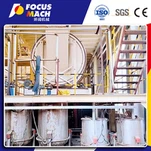
The production of density board begins with the processing of raw materials, which involves the separation of wood into fibers. A crucial step in this process is chipping, where loose wood is cut into chips that meet production specifications to facilitate optimal conditions for fiber separation. Following chipping, wood chips undergo preheating and cooking before mechanical fiber separation takes place. The quality of the hot grinding process significantly impacts the product quality of density boards, emphasizing the necessity to utilize advanced hot grinding machines in the production line. Southeast Wood Industry has introduced state-of-the-art Andretz and Simbelkomp hot grinding machines to ensure industry-leading fiber quality. The combination of hot ground fibers and sizing results in a moisture content of 40% to 50%. Proper drying is essential for subsequent processing stages, with drying temperatures carefully controlled at approximately 165℃ to prevent resin pre-curing and preserve mechanical properties such as static bending (MOR) and tensile strength (IB). During the paving process, dried fibers are stored in bins before being fed through a laying machine using vacuum air for rough molding. Subsequent processes involving sweep rollers and prepress equipment further shape the fibers into boards without causing damage. Hot pressing is a critical stage in density board manufacturing, exerting significant influence on both product quality and output volume. Under heat and pressure, water within the boards undergoes gasification, evaporation, density increase, adhesive redistribution, ultimately forming various binding forces between fibers that meet quality standards. In dry production processes for density boards, industrial wastewater generation is minimal - primarily consisting of cork water extruded by feed screws. Typically treated using anaerobic methods on general production lines following a specific flow chart: workshop wastewater -> initial sedimentation -> water collection sedimentation tank -> anaerobic tank -> air float tank -> SBR pool -> Clear pool -> fiber transition ->drenāža.
|
Modelis Nr. |
FM-MDFX03 |
|
Sertifikācija |
CE, ISO |
|
Stāvoklis |
Jauns |
|
Vārds |
SKODU PLĀŠU RAŽOŠANAS LĪNIJA |
|
Skaidu plātņu izmērs |
4 * 8 pēdas vai pielāgots |
|
Paneļa biezums |
10-30mm |
|
Kokskaidu plātņu rūpnīca |
100-300m3/dienā |
Produktu attēli


Iepakojums un piegāde

Uzņēmuma informācija


Kāpēc izvēlēties mūs
(1) Vairāk nekā 30 gadu ražošanas pieredze koka paneļu izgatavošanas iekārtās.
(2) 20 gadu pieredze eksportēšanā uz vairāk nekā 30 valstīm visā pasaulē.
(3) Pielāgotas mašīnas atbilstoši katra klienta faktiskajam ražošanas pieprasījumam ar labākajiem ražošanas risinājumiem.
(4) Bezmaksas projektēt visu rūpnīcas ražotni ar ekonomisku investīciju budžetu.
(5) Visa procesa kontrole no pasūtījuma veikšanas - ražošana - konteineru iekraušana - muitas dokumenti, kurjers - konteineru izkraušana - iekārtu uzstādīšana un atkļūdošana.
(6) 2 gadu kvalitātes garantijas periods un mūža bezmaksas tiešsaistes pēcpārdošanas serviss.
(7) Profesionāla pēcpārdošanas komanda vairāk nekā 10 gadu ārzemēs uzstādīšanas un atkļūdošanas pieredze.
(8) Bezmaksas apmācība un norādījumi darbiniekiem par mašīnu darbību un koksnes paneļu ražošanas tehnoloģiju.
Populāri tagi: kokvilnas salmu MDF mašīnas, Ķīnas kokvilnas salmu MDF mašīnu ražotāji, piegādātāji, rūpnīca